
ScienceNewsAPI
Ancient DNA reveals pervasive directional selection across West Eurasia - Nature
Overview
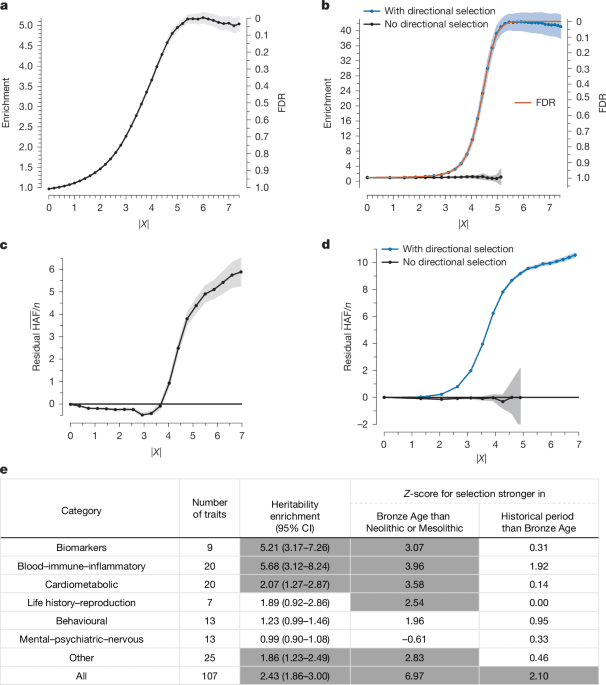
A genome-wide analysis of 15,836 ancient West Eurasian individuals finds hundreds of cases where allele frequencies changed steadily over time, demonstrating that directional selection was common across the region. The recent tooth analysis adds an independent line of physical evidence that interactions and interbreeding among ancient groups provided the demographic mixing that selection then acted upon. Together, the genetic, anatomical, and dental findings help connect long-term evolutionary change in populations with the social and biological interactions that generated variation.
Entities
ORGNatureORGScienceLOCWest Eurasia
Relationship Graph
Click a connection line between nodes to view confidence and evidence.
Nodes: 4 · Connections: 3
Caused by
Led to
Related to
Same event
Press enter or space to select a node. You can then use the arrow keys to move the node around. Press delete to remove it and escape to cancel.
Press enter or space to select an edge. You can then press delete to remove it or escape to cancel.
Click a connection for evidence · click a node to open it
Select a connection to see why these events are linked.