
ScienceNewsAPI
Arizona's Meteor Crater is still revealing new secrets 50,000 years later - Space
Overview
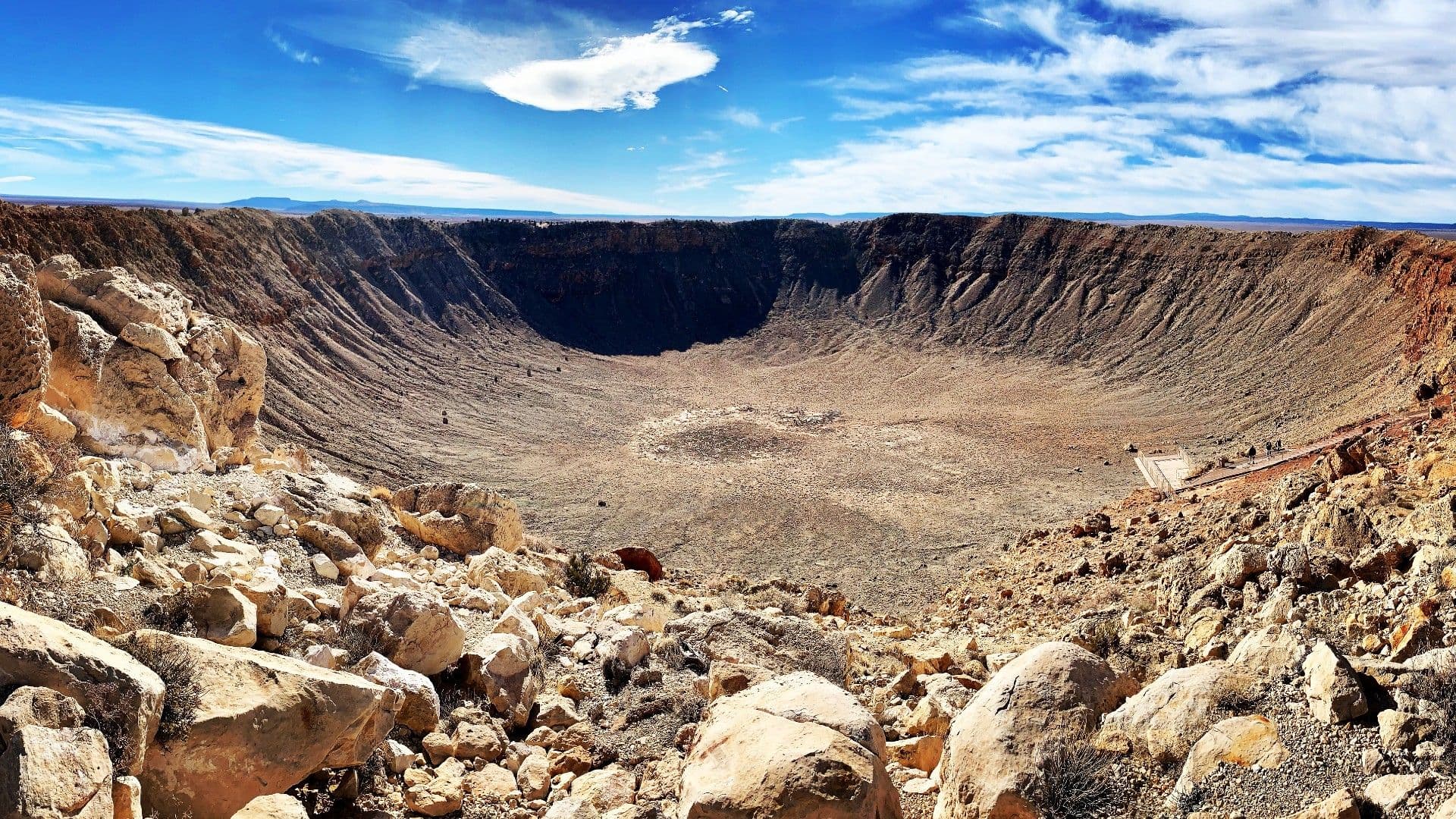
Arizona's Meteor Crater, formed about 50,000 years ago, continues to yield new scientific insights as researchers study its preserved geology, impact processes, and meteoritic material. Ongoing investigations refine models of how impacts form craters, redistribute debris, and preserve or alter extraterrestrial grains, improving interpretations of samples recovered on Earth. The crater also functions as a natural laboratory that complements deliberate impact tests and helps validate approaches used in planetary defense research.
Entities
ORGSpaceLOCArizonaLOCMeteor Crater
Relationship Graph
Click a connection line between nodes to view confidence and evidence.
Nodes: 3 · Connections: 2
Caused by
Led to
Related to
Same event
Press enter or space to select a node. You can then use the arrow keys to move the node around. Press delete to remove it and escape to cancel.
Press enter or space to select an edge. You can then press delete to remove it or escape to cancel.
Click a connection for evidence · click a node to open it
Select a connection to see why these events are linked.