
ScienceNewsAPI
What Crystals Older Than the Sun Reveal About the Start of the Solar System - Quanta Magazine
Overview
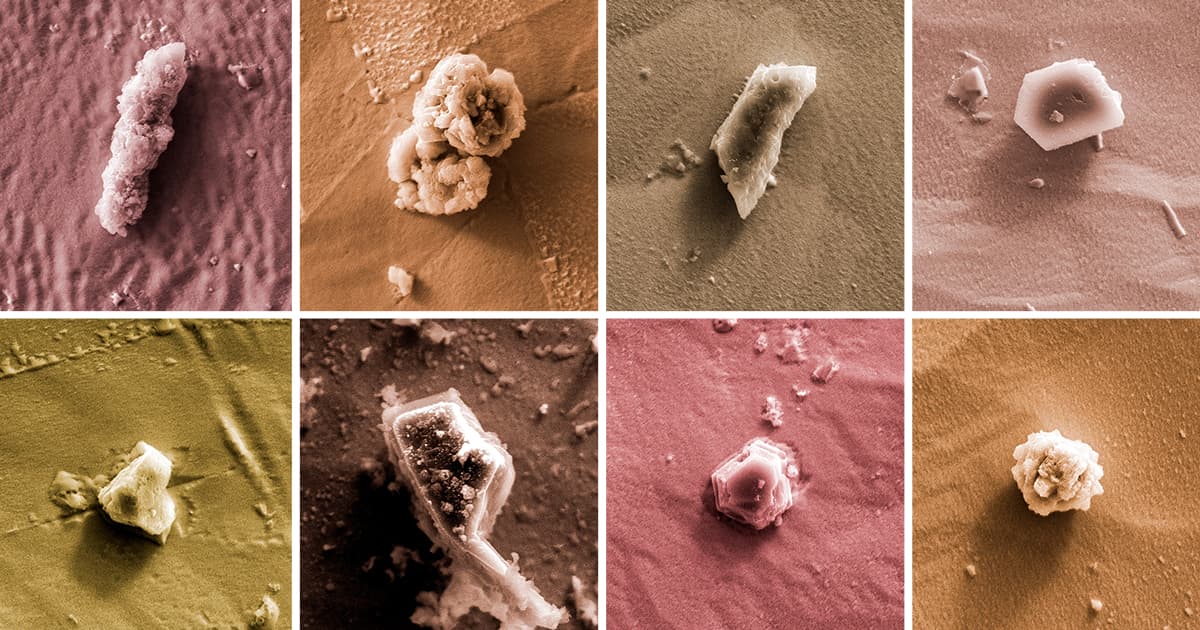
Microscopic crystals extracted from meteorites that predate the Sun preserve isotope signatures from before the solar system formed, showing high aluminum-26 and very little iron-60—consistent with material swept up in the wind-driven shell of a massive star rather than from a nearby supernova. Fresh meteorite samples could expand these isotope studies, but require careful handling to preserve their signatures. The recent discovery of a novel crystal produced by the 1945 Trinity nuclear blast highlights that extreme, rapid formation events—whether astrophysical or human-made—can lock in distinctive structural and chemical records, offering complementary analogs for interpreting cosmic grains.
Entities
ORGQuanta MagazineLOCMilky WayLOCSolar System
Relationship Graph
Click a connection line between nodes to view confidence and evidence.
Nodes: 4 · Connections: 3
Caused by
Led to
Related to
Same event
Press enter or space to select a node. You can then use the arrow keys to move the node around. Press delete to remove it and escape to cancel.
Press enter or space to select an edge. You can then press delete to remove it or escape to cancel.
Click a connection for evidence · click a node to open it
Select a connection to see why these events are linked.