
ScienceNewsAPI
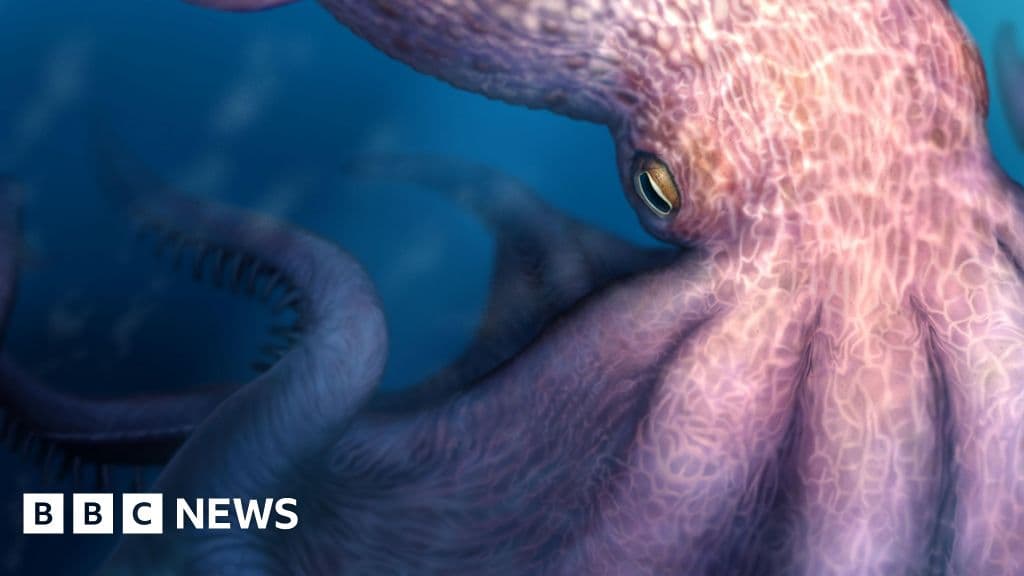
Meet the 19 metre octopus that may have prowled ancient seas - BBC
Overview
Fossil evidence suggests a giant octopus up to 19 metres long may have prowled the seas about 100 million years ago, with a crushing beak, powerful arms, and a comparatively large brain. That research implies such cephalopods could have competed with other large marine predators during the late Cretaceous. The recent study naming a 43-foot mosasaur Tylosaurus rex highlights that these oceans supported diverse, large predators, increasing the likelihood of ecological interactions and competition among top predators.
Entities
ORGBBCLOCancient seas
Relationship Graph
Click a connection line between nodes to view confidence and evidence.
Nodes: 6 · Connections: 5
Caused by
Led to
Related to
Same event
Press enter or space to select a node. You can then use the arrow keys to move the node around. Press delete to remove it and escape to cancel.
Press enter or space to select an edge. You can then press delete to remove it or escape to cancel.
Click a connection for evidence · click a node to open it
Select a connection to see why these events are linked.